
Oxford Poverty & Human Development Initiative

Oxford Department of International Development

Queen Elizabeth House, University of Oxford

Policy

Introduction to multidimensional poverty

What is multidimensional poverty?

Poverty is often defined by one-dimensional measures, such as income. But no one indicator alone can capture the multiple aspects that constitute poverty.

Multi-dimensional poverty is made up of several factors that constitute poor people’s experience of deprivation – such as poor health, lack of education, inadequate living standard, lack of income (as one of several factors considered), disempowerment, poor quality of work and threat from violence.

A multidimensional measure can incorporate a range of indicators to capture the complexity of poverty and better inform policies to relieve it. Different indicators can be chosen appropriate to the society and situation.

Why use a multidimensional approach?

  • Income alone can miss a lot. For example, economic growth has been strong in India in recent years. In contrast, the prevalence of child malnutrition has remained at nearly 50 per cent, which is among the highest rates worldwide (Citizens’ Initiative for the Rights of Children Under Six. 2006. Focus on Children Under Five (FOCUS).New Delhi: Secretariat of the Right to Food Campaign). Multidimensional measures can complement income.
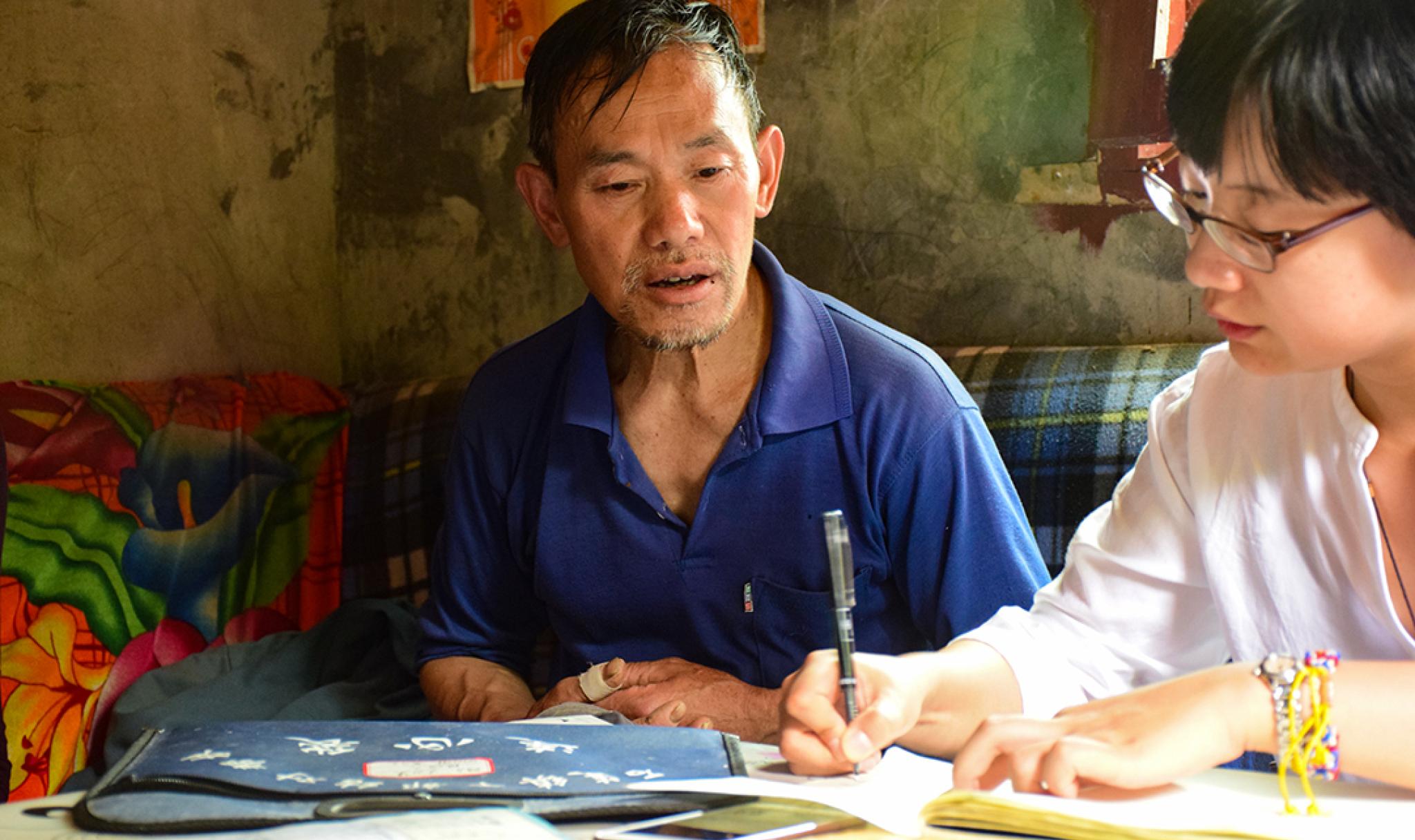
  • Poor people themselves describe their experience of poverty as multidimensional. Participatory exercises reveal that poor people describe ill-being to include poor health, nutrition, lack of adequate sanitation and clean water, social exclusion, low education, bad housing conditions, violence, shame, disempowerment and much more.
  • The more policy-relevant information available on poverty, the better-equipped policy makers will be to reduce it. For example, an area in which most people are deprived in education is going to require a different poverty reduction strategy to an area where most people are deprived in housing conditions.
  • Some methods for multidimensional measurement, such as the OPHI-developed Alkire and Foster method, can be used for additional purposes. In addition to measuring poverty and wellbeing, OPHI’s method can be adapted to target services and conditional cash transfers or to monitor the performance of programmes.

The Alkire Foster Method

An Innovative Technique for Multidimensional Measurement

Devised by Sabina Alkire and James Foster, this technique has several uses:

  • Poverty measures. The Alkire Foster method can be used to create national, regional or international measures of poverty or wellbeing by incorporating dimensions and indicators that are tailored to the country’s context. Mexico used the method and adapted it to create their national poverty measure.
  • Targeting poor people as beneficiaries of services or conditional cash transfers. The Alkire Foster method can be used to target individuals for public service programmes or conditional cash transfers (CCTs) against set criteria.
  • Monitoring and evaluation. The Alkire Foster method can be used to monitor the effectiveness of programmes over time. For example, to monitor the effectiveness of a fair trade programme you could use the method with criteria such as wages, length of contract, quality of produce, timeliness of delivery, number of people, etc, to show at a glance which programme is doing best and in which area.

How is the Alkire Foster method different from other composite measures?

The Alkire Foster method works from people up. By mapping outcomes for each individual or household against the criteria being measured, the method captures both the percentage of people who are poor and the overlapping deprivations that each individual or household faces. This is unique to the Alkire Foster technique and conveys advantages:

  • Measures created using the technique reflect the intensity of poverty (the average number of deprivations or weighted sum of deprivations that each individual experiences).
  • Measures created using the technique are transparent because they can be broken down by dimension, either for the country or for any subgroup.

Why is the Alkire Foster method useful to policy makers?

The Alkire Foster method can be used by NGOs, governments, agencies and the private sector to create measures that have several uses and advantages:

  • Allocate resources effectively. Identify the poorest people and aspects in which they are most deprived. Such information is vital to invest resources where they are likely to be most effective at reducing poverty.
  • Policy design. Identify which deprivations constitute poverty and those which are most common among and within groups so that policies can be designed to address their particular needs.
  • Identify interconnections among deprivations. The Alkire Foster method integrates many different aspects of poverty into a single measure, reflecting interconnections among deprivations and helping to identify poverty traps.
  • Show impacts across time. The method can be quicker to reflect the effects of changes in policies than income alone. For example, if a new social programme aimed at increasing good education is introduced to an area, it will be a long time before any positive benefit in returns from education are reflected in an income measure. In contrast, a multidimensional poverty measure that includes child enrolment and achievement could reflect a reduction in this aspect of poverty relatively quickly because it is measuring it directly.
  • Flexibility. Different dimensions, indicators and cutoffs can be used to create measures tailored to specific uses, situations and societies. These can be set by participatory processes. The method can be used to create poverty measures, to target poor people as beneficiaries of CCTs or services and for monitoring and evaluation of programmes.
  • Complement other metrics. Multidimensional measures can complement other measures of poverty, such as income. Alternatively they can incorporate income as one dimension of several within a multidimensional measure.

Current applications of the Alkire Foster method

The Alkire Foster method for multidimensional measurement is being applied at both the national and international level.

  • International. OPHI created a new international measure of poverty for the United Nations Development Programme’s flagship Human Development Report using the Alkire Foster method. The new measure, named the Multidimensional Poverty Index, was first introuced in the 2010 UNDP Human Development Report (HDR) as a tool to measure the nature and intensity of poverty at the household level. The 2011 MPI covers 109 countries. Read our MPI pages to learn more about the index and the new analysis carried out by OPHI in 2011.
  • National. Governments have used the Alkire Foster method to create their own national poverty measures that employ dimensions and indicators appropriate to their context. Mexico used a form of the Alkire Foster method to create their national poverty measure, Colombia adapted the method to introduce a new national multidimensional poverty measure in 2011 tied to an ambitious poverty reduction strategy, and Bhutan has used it to calculate their ‘Gross National Happiness Index’. Read our national policy pages to learn more about how countries have implemented the method and which other countries are interested in using it.

Our policy work is ongoing and these pages will be augmented and updated. Sign up to our e-newsletter to receive updates. We welcome your feedback and suggestions.

Share and Enjoy:
  • Print this article!
  • Digg
  • Sphinn
  • del.icio.us
  • Facebook
  • Mixx
  • Google Bookmarks
  • Twitter
 |  Trackback